Medical AI
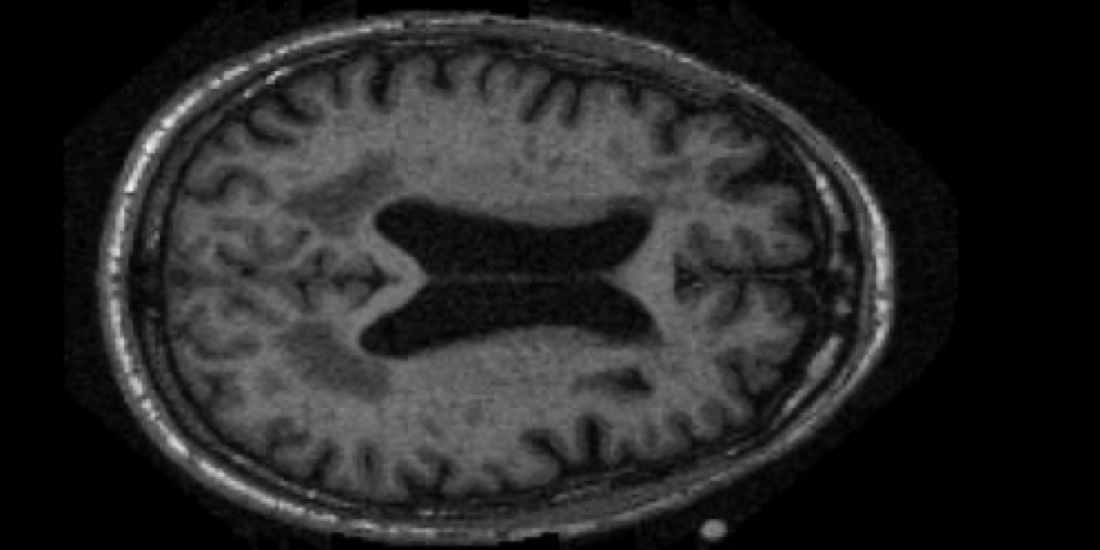
Detecting early Alzheimer's disease from MRI brain scans with a convolutional neural network — reaching accuracy ahead of the human specialist benchmark.
Overview
Catching Alzheimer's earlier means intervening earlier. This project trains an image classifier to read MRI brain scans for the signs — and does it more accurately than the specialist benchmark it was measured against.
The gain didn't come from a bigger model; it came from encoding domain knowledge into how the data is prepared and the network is regularised. The result: 92% accuracy, ahead of the 87% human medical-professional benchmark.
Impact
How it works
- 1
Skull stripping
Non-brain tissue is removed from each scan so the model learns from brain structure, not surrounding noise.
- 2
Targeted slice selection
Mid-brain slices near the hippocampus are selected — the region where the tissue shrinkage characteristic of the disease appears first.
- 3
Augmentation for robustness
Image augmentation increases data variability so the classifier generalises rather than memorising.
- 4
Regularised CNN
Layer regularisation, dropout and normalisation keep the network from overfitting and push accuracy past the benchmark.
The data